Thursday, January 31, 2008

New header

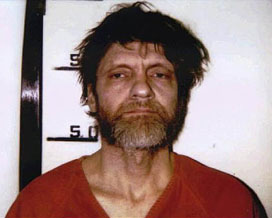
Good morning, everyone. Today we bid farewell, to our old pal Osama, because we have a new terrorist to head up our blog. As a reward for faithful blog participants, I offer one brownie point to the first student to post a comment correctly identifying the nom de guerre of the terrorist pictured in this FBI composite sketch. A second brownie point goes to the first student to give this terrorist's real name (spelling counts). A third brownie point will be awarded to the first student who posts a photograph (1994 or later) of this terrorist. No student will be awarded more than one brownie point, so don't post comments angling for all three.
Good luck!
--PROF. PAYNE
Wednesday, January 30, 2008
Taliban is again on the rise
Taliban is again on the rise
This article shows a good example of the social control that terrorists exercise over the areas around them. "The assault on one of the city's best-protected landmarks was the latest — and most dramatic — sign that the Taliban may be gaining strength more than six years after U.S.-led forces invaded to drive the Islamist militant movement from power." With the attack of these high profile targets in the local community the locals are scared of what could happen to them so even though we may be beating them back they have the social control still to the point where even beggars are distrusted "security fears have become so intense that he even shoos away beggars out of fear they could be wearing suicide vests". This leads to an open question after six years of battling the Taliban we apparently have not completely succeeded so What does it take to completely eliminate or beat a terrorist organization ?
This article shows a good example of the social control that terrorists exercise over the areas around them. "The assault on one of the city's best-protected landmarks was the latest — and most dramatic — sign that the Taliban may be gaining strength more than six years after U.S.-led forces invaded to drive the Islamist militant movement from power." With the attack of these high profile targets in the local community the locals are scared of what could happen to them so even though we may be beating them back they have the social control still to the point where even beggars are distrusted "security fears have become so intense that he even shoos away beggars out of fear they could be wearing suicide vests". This leads to an open question after six years of battling the Taliban we apparently have not completely succeeded so What does it take to completely eliminate or beat a terrorist organization ?
Tuesday, January 29, 2008
Internet Use by Terrorist Organizations
I recently read a very interesting article which addresses the topic we will be discussing in class tomorrow. In the article, a 21-year-old American is spreading propaganda of violent Islamic groups from his parents' home in North Carolina. Although the article states that there is no evidence that he is doing anything illegal, it is alarming to think that there could be many people with similar views close to home. We have no way of knowing if any such activists will one day commit an act of terrorism to further spread their message. The fact that he is a U.S. citizen proposes new threats to domestic security. As terrorist groups successfully recruit using new tools like the internet, their efforts to spread their message are facilitated. These new recruits do not have to worry about traveling into the United States, passports, papers, etc. Another interesting note in the article about terrorists using the internet is that "Since the beginning of the year, Al Qaeda’s media operation, Al Sahab, has issued new videotapes as often as every three days. Even more come from Iraq, where insurgents are pumping them out daily." Terrorists are using sophisticated techniques to indoctrinate and recruit, and I believe that they will be more successful as these technological tools provide avenues to "new fields" of recruitment.
Interesting Source for Suicide Terror Paper
I found this article at UT Austin, about a professor who has specialized in the study of terrorism. He brings up some interesting points about the recruitment of terrorists. In his book about Suicide terrorism he develops the idea that many suicide bombers are not poor illiterate souls who have a death wish. Nor do they even know who they are really killing themselves for. Instead they just think they are serving the people of their community and assume that this is the only way to establish change.
This is contrary to what I have heard about suicide terrorists, I have always assumed it was one of the down trodden society who were brainwashed into believing in the cause. But many of the people recruited are making conscious decisions to blow themselves up, usually because of some feeling or desire to improve the lives of their neighbors. It was also noted that the people believe they are sacrificing for the cause, suicide is not in the job description when being recruited. It's kinda funny how if you change the name of something it suddenly becomes not only acceptable but desirable.
This is contrary to what I have heard about suicide terrorists, I have always assumed it was one of the down trodden society who were brainwashed into believing in the cause. But many of the people recruited are making conscious decisions to blow themselves up, usually because of some feeling or desire to improve the lives of their neighbors. It was also noted that the people believe they are sacrificing for the cause, suicide is not in the job description when being recruited. It's kinda funny how if you change the name of something it suddenly becomes not only acceptable but desirable.
We're not the only ones....
The Article
Interestingly enough, the head of Australia's Federal Police has been under fire recently for using pre-emptive counter terrorist methods, similar to parts of the American public's recent disdain for some aspects of the Patriot Act such as wiretapping. The controversy in Australia stems from what Keelty, the chief of the AFP, calls the "tension, real or perceived, between the right to silence and a fair trial and the right of the community to access information." In the Australian case, the AFP recently brought to trial an Indian doctor whose case they ultimately had to dismiss. The press has called Keelty's anti-terrorism methods bad because he didn't have enough evidence beforehand to convict him. Keelty condemned the press for misleading the public and misrepresenting his agency and their counter terrorist tactics as poor. This article highlights the difficulties that governments face when fighting terrorism. Do they crack down hard and risk civil liberties groups complaints? Or do they ease up and risk terrorist attacks? There seems to be a very fine line that no government has been able to find yet. Where does that line exist? It is interesting that other countries are facing the same difficulties that the US is in fighting terrorists effectively while at the same time respecting the rights of their citizens.
Interestingly enough, the head of Australia's Federal Police has been under fire recently for using pre-emptive counter terrorist methods, similar to parts of the American public's recent disdain for some aspects of the Patriot Act such as wiretapping. The controversy in Australia stems from what Keelty, the chief of the AFP, calls the "tension, real or perceived, between the right to silence and a fair trial and the right of the community to access information." In the Australian case, the AFP recently brought to trial an Indian doctor whose case they ultimately had to dismiss. The press has called Keelty's anti-terrorism methods bad because he didn't have enough evidence beforehand to convict him. Keelty condemned the press for misleading the public and misrepresenting his agency and their counter terrorist tactics as poor. This article highlights the difficulties that governments face when fighting terrorism. Do they crack down hard and risk civil liberties groups complaints? Or do they ease up and risk terrorist attacks? There seems to be a very fine line that no government has been able to find yet. Where does that line exist? It is interesting that other countries are facing the same difficulties that the US is in fighting terrorists effectively while at the same time respecting the rights of their citizens.
Monday, January 28, 2008
Collective Punishment
http://news.bbc.co.uk/2/hi/middle_east/7211966.stm
Whether a stated strategy of Hamas, the groups actions have elicited the kind of response from Israel that could be classified as part of the Indirect Strategy or Outside Intervention Strategy. This article discusses the most recent actions taken by the Israeli government to stop terrorist action against their citizens. These actions have been heavy-handed and have allowed Hamas to gain more support within the Gaza strip and has outraged members of the international community against Israel. In particular, the Israeli government has made it difficult for the Gazans to acquire fuel. This has contributed to a burgeoning humanitarian crisis, in which hospitals do not have the fuel necessary to run their facilities. Hamas, perhaps in an effort to attenuate the crisis and appear as the heros, broke down parts of the Egyptian border so that Gazans could cross into Egypt and gather supplies. Thousands crossed the border into Egypt in pursuit of food.
The international community has put pressure on Israel to allow fuel back into Gaza. Israel has agreed for now. However, they say the withholding of fuel from the Gazans is part of a overarching strategy to combat terror through what can be described as "collective punishment". If the Gazans feel enough pressure, they will turn on their own community and root out potential terrorists. This policy, perhaps, is not working as well as Israel hopes. It might, in fact only perpetuat the problem. If Israel resorts to tactics that hurt the civilian population, they will increase its enemies and those who might have considered peaceful means of protest have no choice but to fight back violently in order to protect themselves and their families. They might want to reconsider their plan.
Whether a stated strategy of Hamas, the groups actions have elicited the kind of response from Israel that could be classified as part of the Indirect Strategy or Outside Intervention Strategy. This article discusses the most recent actions taken by the Israeli government to stop terrorist action against their citizens. These actions have been heavy-handed and have allowed Hamas to gain more support within the Gaza strip and has outraged members of the international community against Israel. In particular, the Israeli government has made it difficult for the Gazans to acquire fuel. This has contributed to a burgeoning humanitarian crisis, in which hospitals do not have the fuel necessary to run their facilities. Hamas, perhaps in an effort to attenuate the crisis and appear as the heros, broke down parts of the Egyptian border so that Gazans could cross into Egypt and gather supplies. Thousands crossed the border into Egypt in pursuit of food.
The international community has put pressure on Israel to allow fuel back into Gaza. Israel has agreed for now. However, they say the withholding of fuel from the Gazans is part of a overarching strategy to combat terror through what can be described as "collective punishment". If the Gazans feel enough pressure, they will turn on their own community and root out potential terrorists. This policy, perhaps, is not working as well as Israel hopes. It might, in fact only perpetuat the problem. If Israel resorts to tactics that hurt the civilian population, they will increase its enemies and those who might have considered peaceful means of protest have no choice but to fight back violently in order to protect themselves and their families. They might want to reconsider their plan.
Suicide Terror...
I am working on the paper that is due next Monday, and I found an article written by Ellen Townsend in which suicide terrorists are compared to suicidal individuals that are not connected with terrorist organizations. She found that suicide terrorists are not "suicidal" in the conventional sense. She then gives her opinion about what motivates people to be suicide terrorists. I hope people find this article useful if they are writing the second paper. If anyone has any other articles they found useful, please post them.
LINKS
To the left you will see a new set of "terrorism links." I took these from some of your posts. If any of you know of other useful websites on terrorism/counterterrorism/bioterrorism, etc., put the links in as comments with a little explanation of the site's importance.
Sunday, January 27, 2008
US Must Increase Pressure On Pakistan To Control Terrorism In Tribal Areas
http://www.opednews.com/maxwrite/diarypage.php?did=5809
This article is on how the United States have attacked tribal areas in Pakistan. It talks about how Pakistan is a main Ally in fighting terrorism but how the United states still fears that terrorist are coming out of the tribal region. However, in the articel it said, "Most of the tribesmen think that US has made a bad deal with Pakistan. Why they have been opposing US presence in tribal areas? Actually Pakistani leaders have been using tribal areas for their game through which they have been earning dollars."
This caused Davos President Musharraf to say that he thinks the United States should worry on Iraq and Afganistan instead of involving itself in other areas.
The main question that I have from this article ishow will this affect the US, Pakistany relationships?
If anyone can help that would be great.
Thanks
Austin
This article is on how the United States have attacked tribal areas in Pakistan. It talks about how Pakistan is a main Ally in fighting terrorism but how the United states still fears that terrorist are coming out of the tribal region. However, in the articel it said, "Most of the tribesmen think that US has made a bad deal with Pakistan. Why they have been opposing US presence in tribal areas? Actually Pakistani leaders have been using tribal areas for their game through which they have been earning dollars."
This caused Davos President Musharraf to say that he thinks the United States should worry on Iraq and Afganistan instead of involving itself in other areas.
The main question that I have from this article ishow will this affect the US, Pakistany relationships?
If anyone can help that would be great.
Thanks
Austin
France-India cooperation
I found this interesting article online about France and India cooperating to fight terrorism. You can find the here
At first I thought it was interesting to see cooperation between France and India, but then I read in the article that they actually have very similar goals and concerns as far as terrorism is concerned. For instance, they are both concerned with the issues of non-proliferation of nuclear weapons, and weapons of mass destruction. France is also worried that an increase in terrorism in Pakistan and Central Asia, could increase the number of terror-related incidences in Western Europe. The article stated: "Mr Sarkozy said extremism in one region has repercussions elsewhere too. "
I think it good to see such cooperation between countries that are so geographically distant from each other. It just goes to show us that countries are recognizing that globalization is weakening borders and the terrorist links between India and Pakistan, and Western Europe are growing stronger.
I would encourage you guys to read this article.
At first I thought it was interesting to see cooperation between France and India, but then I read in the article that they actually have very similar goals and concerns as far as terrorism is concerned. For instance, they are both concerned with the issues of non-proliferation of nuclear weapons, and weapons of mass destruction. France is also worried that an increase in terrorism in Pakistan and Central Asia, could increase the number of terror-related incidences in Western Europe. The article stated: "Mr Sarkozy said extremism in one region has repercussions elsewhere too. "
I think it good to see such cooperation between countries that are so geographically distant from each other. It just goes to show us that countries are recognizing that globalization is weakening borders and the terrorist links between India and Pakistan, and Western Europe are growing stronger.
I would encourage you guys to read this article.
Saturday, January 26, 2008
Taliban Activities in Kabul
This Economist article discusses the January 14th suicide bombing of an Afghani hotel. The bombing was notable because it exemplifies a recent shift in Taliban targets to include expatriates living in Kabul. This supports Bruce Hoffman's definition of terrorism: "the deliberate creation and exploitation of fear..." (see Inside Terrorism, p. 40). Because defining terrorism has been a central part of readings, class discussions, and papers, it's important that we recognize the role of fear as a goal of terrorism. Surely the Taliban wants to stir fear in Kabul's foreigners (many of whom are Westerners and byproducts of globalization...which, as discussed in class on Friday, is often severely disliked), otherwise they would not have shifted their violence to include these expatriates, who had thought their hotel to be secure. Why do terrorists want the power to make others afraid? Because enough fear can cripple those who are currently stronger than them. (Remember Paul Pillar defined terrorism as "the quintessential weapon of the weak against the strong" on p. 1 of Terrorism and US Foreign Policy.) Fear may be used to chain supporters or to chase away potential targets.
Spreading of Afgan Violence Into Pakistan
In the New York Times for Friday, January 18th, it contained an article about the spread of violence from the Taliban and Al Qaeda into Pakistan. I thought this was particularly an interesting article because of the change of strategy of many of the Taliban. Obviously the Taliban have an ultimate goal of regaining control of Afghanistan, but many of them are taking refuge in parts of Pakistan. In the town of Peshawar they are especially having difficulties with the Taliban and Al Qaeda insurgents. There appears to be an attempt to overtake the town by the insurgents and according to many involved in the fight, the insurgents are doing quite well. The people are starting to lose their faith in the government and the police fear for their safety. It appears that the insurgents could very well take this territory for their own. I thought that was kind of interesting because I was not aware of too many areas where the insurgents really held land other than small tribal areas outside of this town. It would be interesting to see how the fight evolves from there. I also wonder, what really would be the significance and result if the insurgents did take a town like Peshawar? Especially since Pakistan is not a region that American forces have been fighting the insurgents.
Thursday, January 24, 2008
Counterterrorism Calender
*Please do not count this as a graded post*
I know you've all been waiting for this, but the time has finally come. The National Counterterrorism Center has just released the 2008 Counterterrorism Calender. It includes all sorts of interesting information on terrorism, from profiles of the most-wanted terrorists in the world, to terrorist logos, how to spot a fake passport, and something titled "TNT Equivalents for Various Explosives and Fuel-Air Mixtures".
Here it is in pdf form. FYI, it's like 24 mb, so make sure you have a strong internet connection.
I know you've all been waiting for this, but the time has finally come. The National Counterterrorism Center has just released the 2008 Counterterrorism Calender. It includes all sorts of interesting information on terrorism, from profiles of the most-wanted terrorists in the world, to terrorist logos, how to spot a fake passport, and something titled "TNT Equivalents for Various Explosives and Fuel-Air Mixtures".
Here it is in pdf form. FYI, it's like 24 mb, so make sure you have a strong internet connection.
Habeas Corpus and Detainees...
Reading the Padilla article brought me to searching the net for more on the Detainees' Appeal to repeal the Detainee Treatment act.
Here is the interesting article about the rights of the detainees in Gitmo as they currently stand. It seems the detainees suddenly really like the western world, they embrace the constitution and all of its intricacies, claiming they have a right to Habeas Corpus. How can someone go from working to topple the government of the US and then whole heartedly expect that the US would give them any rights let alone the same rights as a citizen.
The founding fathers had a clear understanding that treason would be treated as a death penalty offense and in regards to those who participated in British attacks on Americans, or were caught sharing intel with the British would be killed with a simple trial requiring that the evidence be presented and judgment passed. I do think the trials are taking longer than necessary to complete, but the persons still being held are the ones which a legitimate threat has been found, not the other 4000 we have released without harm.
I am obviously a constructionist in this matter but when dealing with traitors why should we grant them the rights they so willingly gave up when plotting attacks against us? Doesn't being a citizen come with any special rights? (ie bill of rights, for the people of the US, not the people against it)
Here is the interesting article about the rights of the detainees in Gitmo as they currently stand. It seems the detainees suddenly really like the western world, they embrace the constitution and all of its intricacies, claiming they have a right to Habeas Corpus. How can someone go from working to topple the government of the US and then whole heartedly expect that the US would give them any rights let alone the same rights as a citizen.
The founding fathers had a clear understanding that treason would be treated as a death penalty offense and in regards to those who participated in British attacks on Americans, or were caught sharing intel with the British would be killed with a simple trial requiring that the evidence be presented and judgment passed. I do think the trials are taking longer than necessary to complete, but the persons still being held are the ones which a legitimate threat has been found, not the other 4000 we have released without harm.
I am obviously a constructionist in this matter but when dealing with traitors why should we grant them the rights they so willingly gave up when plotting attacks against us? Doesn't being a citizen come with any special rights? (ie bill of rights, for the people of the US, not the people against it)
Tuesday, January 22, 2008
Padilla's Sentencing
I have to say I am oh so fond of how caring our judges are to terrorist conspirators and how concerned we all are over their "treatment." It seems that we are quick to forget that these conspirators sought to kill, maim, destroy Americans and our interests. Regardless of their status as a citizen or not, upon committing treason and such acts, in my mind you have in large part forfeited your generally applicable constitutional rights. I do not condone detention of innocents and people who have no formal charges brought against them, but then again I am not for indefinite appeals and abuse of our legal system by terrorists and criminals. A "Quick and speedy trial" is not just the government's duty to ensure, but is also a responsibility of the accused. So often I see our system abused by those who have informal connections with other governments, private interest groups or other wealthy backers. Justice is not blind in this country. We have become a country full of people who sell our justice for a price, and sometimes it doesn't even cost that much, and our judges just coddle criminals because they have their own agenda, which is a far cry from the oath which they are supposed to uphold. See article on Padilla's sentencing.
Iraqis Stepping it Up
I read this this morning, and a few things struck me as particularly interesting. First was the young age of the bomber, 13 or 14! I did not know that terrorist groups recruited kids that young. Second, and more profound in my view, is that the local people condemned the act, even burning the house of the family of the bomber. In the 6th paragraph, they quote one of the locals as saying "We will not permit anyone with this ideology to stay in our village." I'm wondering if this viewpoint, an open and violent rejection of radical Islam, is more widespread than reported in the media. Certainly it would help the United States if the locals also took it upon themselves to eradicate radical Islam as they do not benefit from terrorism any more than the US does. I think that they media portrays the Iraqis as not liking the American presence, but I also believe that, as shown in this article and a documentary I recently watched in another class (Frontline: The Insurgency), that Iraqis need the help of the US to fight the terrorist. Iraq would be in a catastrophic state if we weren't there and if we leave too soon. (Yet one more reason not to vote for Hillary Clinton: "I will get the troops out within 60 days of taking the presidency." Yeah right.) However, I do believe that the Iraqis need to start taking more responsibility in their government. The US can not be their crutch. And as this article shows, the Iraqis are sick of terrorism too and are taking matters of destroying terrorism into their own hands, which can only be beneficial for the US.
Monday, January 21, 2008
Sympathizers Seek Answers From al-Qaida
http://http://www.washingtonpost.com/wp-dyn/content/article/2008/01/21/AR2008012100817_3.html
Apparently al-Qaida opened a website for a limited period of time in which sympathizers could ask questions of the organization. A broad range of questions were asked concerning al-Qaida's intentions and strategies for future attacks. Many sympathizers wanted to know why further attacks had not been made against the U.S., and those claiming to be part of al-Qaida asked for direction for future attacks. The Associated Press isn't certain that the site is legitimate, and they don't know if the claimed sympathizers are actually members of al-Qaida. No answers to the hundreds of questions posed to al-Qaida have been answered. I don't know what to make of the site. It seems a bit hokey. Any comments?
Apparently al-Qaida opened a website for a limited period of time in which sympathizers could ask questions of the organization. A broad range of questions were asked concerning al-Qaida's intentions and strategies for future attacks. Many sympathizers wanted to know why further attacks had not been made against the U.S., and those claiming to be part of al-Qaida asked for direction for future attacks. The Associated Press isn't certain that the site is legitimate, and they don't know if the claimed sympathizers are actually members of al-Qaida. No answers to the hundreds of questions posed to al-Qaida have been answered. I don't know what to make of the site. It seems a bit hokey. Any comments?
Sunday, January 20, 2008
Terrorism mis-defined
Like my last post, I found another article that describes a recent event in which I believe the term "terrorism" was incorrectly applied. You can find the article here
Besides some perhaps suspicious activity, the government of Kenya has no reason to believe that these individuals are involved in terrorist organizations.
I guess it's possible, and likely, that the government of Kenya has a different definition of terrorism then the US gov't does, but I don't see how this suspicious activity (and it is suspicious) can be identified as terrorism so quickly.
Besides some perhaps suspicious activity, the government of Kenya has no reason to believe that these individuals are involved in terrorist organizations.
I guess it's possible, and likely, that the government of Kenya has a different definition of terrorism then the US gov't does, but I don't see how this suspicious activity (and it is suspicious) can be identified as terrorism so quickly.
Lankan President lauds Indian policy on terrorism
Hey guys I read this article on Sri Lankan President Mahinda Rajapakse and his interaction with India. He said, Colombo was having regular interaction with New Delhi on the developments related to ethnic conflict in the island nation. It looks like Rajapakse is working with India to fight terrorism. I was wondering if anyone knows what terrorism groups are in the region. Or if anyone knows the United States views on this. I hope you like the article and it brings some good feedback.
Thanks
austin
http://www.hindu.com/thehindu/holnus/001200801201412.htm
Thanks
austin
http://www.hindu.com/thehindu/holnus/001200801201412.htm
Saturday, January 19, 2008
Tamil Tigers' Tactics
The Tamil Tigers are again wreaking havoc in Sri Lanka. According to an Economist briefing from the January 12-18 edition, a government official was killed in the bombing near Colombo. (I couldn't find it on the Economist website, but it's on p. 8 of the journal under the heading "A violent state of affairs"). I've read a few NYT articles on the recent bombings and shootings, trying to find more information, but none of them mentioned the death of a government minister. However, the mentioning in the Economist caught my attention because it could shed greater light on the Tigers' strategies. If they are randomly exploding bombs in public places, perhaps they are just trying to get international attention (and influence within the state). Yet, if the Colombo bomb was purposefully exploded to kill the late government minister, then perhaps they were employing the "decapitation" strategy discussed in class. Granted, they did not assassinate the head of state, but they did kill a state leader. We can't really make this call without more information though; to identify the strategy (or strategies) used, we would need to know if the minister was a deliberate victim of the terrorist act.
Thursday, January 17, 2008
MAKE SURE I CAN TELL WHO YOU ARE
This is Brent Mangum. Prof. Payne has asked me to keep track of who is posting or commenting. I can usually look through email names or match up initials to the person who deserves credit, but let's not make my job unnecessarily hard. If you want to stay semi ananamous, just a first name or last name is fine. Also, if you've gone back a few days and commented on an old post, let me know. I usually go back a few days to see if there are new comments on old posts, but if you want to make sure I don't miss yours, again, let me know. Thanks.
More violence in Iraq
The Article
Today in Iraq is the Shi'ite holy holiday of Ashura. A suicide bomber exploded a bomb near a mosque in Baquba and killed eight people and wounded another fourteen. What is interesting about both the location of the attack as well as those targeted in the attack is that over the past few years, the US military has been fighting Sunni and al Qaeda insurgents in the area and the area has been described as very violent. In fact, the article states that suspected al Qaeda attacks have killed over 171 during the holiday of Ashura in 2004. While the article mentions no suspects, (other than the bomber himself), al Qaeda can be considered a prime sponsor suspect. This particular bombing reminds me of what we learned in class regarding terrorist strategies. This is an example of indirect action. Sunni insurgents hope that by committing terrorist acts that the government will brutally repress the people and that the people will respond by revolting against the government. This principle is happening right now in Iraq. In response to previously bloody Ashura's, the government is cracking down on people's liberty in order to minimize death. For example, the government has imposed vehicle curfews all over southern Iraq in order to protect Shi'ites observing Ashura. Sunni militants also hope that their attacks will provoke a violent response by Shi'ites thereby escalating the level of violence in the country.
Today in Iraq is the Shi'ite holy holiday of Ashura. A suicide bomber exploded a bomb near a mosque in Baquba and killed eight people and wounded another fourteen. What is interesting about both the location of the attack as well as those targeted in the attack is that over the past few years, the US military has been fighting Sunni and al Qaeda insurgents in the area and the area has been described as very violent. In fact, the article states that suspected al Qaeda attacks have killed over 171 during the holiday of Ashura in 2004. While the article mentions no suspects, (other than the bomber himself), al Qaeda can be considered a prime sponsor suspect. This particular bombing reminds me of what we learned in class regarding terrorist strategies. This is an example of indirect action. Sunni insurgents hope that by committing terrorist acts that the government will brutally repress the people and that the people will respond by revolting against the government. This principle is happening right now in Iraq. In response to previously bloody Ashura's, the government is cracking down on people's liberty in order to minimize death. For example, the government has imposed vehicle curfews all over southern Iraq in order to protect Shi'ites observing Ashura. Sunni militants also hope that their attacks will provoke a violent response by Shi'ites thereby escalating the level of violence in the country.
Wednesday, January 16, 2008
Tamil Tigers Continue to Kill in the Wake of Ceasefire...
the article...
Wednesday morning the Tamil Tigers struck at a bus of civilians, initially using a roadside bomb to blow the bus off the road, and then shooting at the fleeing survivors. 26 were killed with another 62 injured.
President Mahinda Rajapaksa commented, ''This is a brazen demonstration to the whole world of its unchanged commitment to terrorism and the absolute rejection of democracy and all norms of civilized behavior in the pursuit of its unacceptable goal of separation.''
The Tamils are labeled as a terrorist group in both the US and the EU.
In class the other day we were discussing the desire of terrorist organizations to do things that would get the attention of the media and the world. However, it seems that the Tamil Tigers are not in the mood to accept responsibility for the attacks they make. This is interesting because it is so different from the frequency other groups, such as Al-Qaida, claim responsibility for attacks they have perpetrated. In class we also discussed the possibility of a group claiming responsibility for attacks it did not commit, but the idea of not claiming responsibility was not discussed, and at least I did not even consider it. Perhaps this is the Tamil's way of trying not to appear as a terrorist organization...?
Wednesday morning the Tamil Tigers struck at a bus of civilians, initially using a roadside bomb to blow the bus off the road, and then shooting at the fleeing survivors. 26 were killed with another 62 injured.
President Mahinda Rajapaksa commented, ''This is a brazen demonstration to the whole world of its unchanged commitment to terrorism and the absolute rejection of democracy and all norms of civilized behavior in the pursuit of its unacceptable goal of separation.''
The Tamils are labeled as a terrorist group in both the US and the EU.
In class the other day we were discussing the desire of terrorist organizations to do things that would get the attention of the media and the world. However, it seems that the Tamil Tigers are not in the mood to accept responsibility for the attacks they make. This is interesting because it is so different from the frequency other groups, such as Al-Qaida, claim responsibility for attacks they have perpetrated. In class we also discussed the possibility of a group claiming responsibility for attacks it did not commit, but the idea of not claiming responsibility was not discussed, and at least I did not even consider it. Perhaps this is the Tamil's way of trying not to appear as a terrorist organization...?
Modernity and the spread of Terrorism
This article is important for a significant number of factors. First, it is a perfect example of how Al-Qaeda and other similar terrorist organizations use the internet for propaganda and publicity towards their cause. Second, it helps debunk the myth that most terrorists are poor and uneducated. And third, it throws light on the fact that terrorists use the technological means available to achieve their objectives and that the media is indispensable to spreading their cause.
This leads me to speculate about the extent to which modernity is both a cause and a means of terrorism. I believe that it may be a cause because terrorism is in many ways a response to western cultural imperialism, be it the colonization of foreign territories or signing of treaties which allow one ethnic group to usurp the homeland belonging to another ethnic nationality(for example: Israel) . Similarly, I believe that advances in the field of communication and transportation have been used by terrorists as a means to gain publicity towards their cause.
This may be something we want to think about as a class.
Great Terrorism website
Here is a link to a website I found that has tons of terrorism resources. This should definitely be helpful for our presentations. You can search for a terrorist group by region, or ideology. You can also search terrorism incidents by location, number of fatalities, or even weapons used. It also has a database of known terrorist leaders. Basically, it has everything you could ever want to know about terrorist groups. The links section includes tons of other useful websites. The further reference section contains tons of articles on terrorism. It's a really interesting website to just browse through. Some of the stuff they have is surprising. Anyone that has taken Pl Sc 328 will find the National Counterterrorism Center WITS Dataset interesting (And if you haven't taken 328, and can avoid it, don't take it). Enjoy!
Congressional Terrorist
http://www.breitbart.com/article.php?id=D8U76PK82&show_article=1
This link will take you to an article that discusses the involvement of former US congressman and UN representative Mark Deli Siljander, a Republican from Michigan, in aiding a known terrorist in Pakistan. The allegation goes, that Siljander was working as a fundraiser for an Islamic charity that was sending money to supposed orphanages that later turned out to only be the addresses of personal property of a known terrorist Gulbuddin Hekmatyar.
Moreover, Representative Siljander is accused of taking $50,000 from the Islamic American Relief Agency for lobbying. As it turns out the $50,000 dollars was supposedly stolen from the US Agency for International Development. In other words, a US representative accepted stolen money from a charity that was using its donations to fund terrorists linked with the Taliban and Al Qieda. The same representative also aided the organization in gaining the funding that it needed to operate. Does Siljander qualify as a terrorist?
I feel that as long as he knew that he was supporting an organization that was directly funding a terrorist he is also a terrorist. Our readings point out that different members of terrorist cells and organizations have different responsibilities. Former Representative Siljander may not have ever fired a weapon or detonated a bomb, but he was fundamental in securing funding for organizations that are engaging in just such activities.
This link will take you to an article that discusses the involvement of former US congressman and UN representative Mark Deli Siljander, a Republican from Michigan, in aiding a known terrorist in Pakistan. The allegation goes, that Siljander was working as a fundraiser for an Islamic charity that was sending money to supposed orphanages that later turned out to only be the addresses of personal property of a known terrorist Gulbuddin Hekmatyar.
Moreover, Representative Siljander is accused of taking $50,000 from the Islamic American Relief Agency for lobbying. As it turns out the $50,000 dollars was supposedly stolen from the US Agency for International Development. In other words, a US representative accepted stolen money from a charity that was using its donations to fund terrorists linked with the Taliban and Al Qieda. The same representative also aided the organization in gaining the funding that it needed to operate. Does Siljander qualify as a terrorist?
I feel that as long as he knew that he was supporting an organization that was directly funding a terrorist he is also a terrorist. Our readings point out that different members of terrorist cells and organizations have different responsibilities. Former Representative Siljander may not have ever fired a weapon or detonated a bomb, but he was fundamental in securing funding for organizations that are engaging in just such activities.
Ex-US Congressman lobbies for Al-Qaeda
http://ap.google.com/article/ALeqM5hw36mXsH7fbogLzqW06NU31aQAmgD8U77NV81
Today, former US Congressman (GOP, MI) Marc Deli Siljander was indicted for his role in laundering at least $130,000 to al-Qaeda. For his work as a lobbyist for the Islamic American Relief Agency (IARA), Siljander is said to have received $50,000. Instead of using its donations from USAID for development in Africa, IARA paid Silijander $50,000 and sent the rest of the money to an al-Qaeda contact in Pakistan.
In class today, we talked about the means whereby terrorists carry out their operations; one of those means was fundraising. It’s truly scary and appalling to find out that a US congressman was involved in such activities. I can’t help but point out a parallel between this occurrence and what Moroni wrote in Ether 8:23-25:
“Wherefore, O ye Gentiles, it is wisdom in God that these things should be shown unto you, that thereby ye may repent of your sins, and suffer not that these murderous combinations shall get above you, which are built up to get power and gain—and the work, yea, even the work of destruction come upon you, yea, even the sword of the justice of the Eternal God shall fall upon you, to your overthrow and destruction if ye shall suffer these things to be.
Wherefore, the Lord commandeth you, when ye shall see these things come among you that ye shall awake to a sense of your awful situation, because of this secret combination which shall be among you; or wo be unto it, because of the blood of them who have been slain; for they cry from the dust for vengeance upon it, and also upon those who built it up.
For it cometh to pass that whoso buildeth it up seeketh to overthrow the freedom of all lands, nations, and countries…”
Evolution of Terrorism or a Decline of Terrorism in Iraq?
On the New York Times web site, there was an article posted in which it talked about a recent attack that took place in the Iraqi region of Diyala. The interesting circumstances about this attack versus many others was the fact it was conducted by a woman. I guess the trend is turning toward more attacks by women. The post on the article actually has changed to some degree since I originally read it, so I'll share some of what it mentioned additionally. Apparently it suggested two opposing viewpoints as far as what this trend really means. U.S. officials suggest that this means the insurgent forces are losing numbers and are required to rely upon women in order to carry out such attacks. The opposing view is the idea that women are typically considered to be less of a threat and their clothing make it easier to conceal explosives and so it is advantageous to use women to carry out such attacks.
These opposing viewpoints really bring up some interesting issues. The first viewpoint was suggested by U.S. officials. It's reasonable to ask if this is just spin coming from the government in order to help support the effort in Iraq. It does seem reasonable that women could become the new suicide bombers because insurgent forces are reduced to few but women, but the likelihood is questionable. Now the other theory suggests an evolution in terrorist tactics by using women for the reasons stated above. For me, this seems a bit more likely of an outcome, especially because women are not treated as equals in most Arab cultures, so it seems like they would be more "expendable" for terrorist organizations. Certainly there seems to be a lot of strength in this tactic because of Western chivalric attitudes toward women. Women are not typically seen as threats and as potential combatants and certainly there is an attitude of preserving women from attack and doing them no harm. If this really is an evolution in terrorist tactics, it appears that it will be another difficult battle for counterterrorist forces to learn how to combat.
The link above should take you to an article concerning the escape of a suspected terrorism from a Pakistani prison. This suspect was supposed to be awaiting trial for a plot to blow up a British airplane. I chose to post this article because I feel that it punctuates an important problem with counter terrorism. At times cooperation between nations is at best limited. Pakistan has allowed many US and NATO participant operations within their borders since 9/11 compared to before. However, a large problem arises when are allies (even if they are limited allies) do not have the capability to carry out operations of their own. This may result from limited resources, or from elements of their societies who sympathize with the terrorist causes. Some governments may also realize that they cannot jeopardize international relations with world super powers if they are going to compete in a global economy, but only make marginal efforts to help. For example, Indonesia has responded to terrorist attacks against Western citizens, but their response is generally incredibly lenient. One individual convicted for the Bali blast in 2005 by Indonesia, received a two year sentence, which was later commuted after only 18 months.
Tuesday, January 15, 2008
Death of bin Laden?
I was browsing through international news agencies and came across this report found on a Russian? news site:
Greg Scott
Benazir Bhutto named Osama bin Laden’s killer before her death
Bhutto said, "Omar Sheikh is the man who murdered Osama bin Laden." Bhutto said this in an interview with Al-Jazeera on Nov. 2. You can view it here: Video. I haven't heard this claim on the U.S. news wires and wonder why.Greg Scott
Monday, January 14, 2008
Suicide Terrorism
http://www.amconmag.com/2005_07_18/article.html
The Logic of Suicide Terrorism: It's the Occupation, not the Fundamentalism
In this article, Robert Pape of the University of Chicago asserts that suicide terror is driven not by Islamic Fundamentalism, but by terrorist's wish to rid their homelands of foreign forces. His argument does not persuade me because while occupation may be the chief concern that causes terrorists to commit acts of violence, the motivation to perfrom suicide terror may be influenced by many different grievances terrorist groups have against those people occupying their homelands. When considering why a group might be opposed to foreign occupation, differences in religion would defintely be something to consider. Such differneces could drive individuals to perform acts of suicide terror in the hopes of liberating the homeland. I would be interested in finding out what others think about this article. It is a quick and interesting read, and it does have some good points.
The Logic of Suicide Terrorism: It's the Occupation, not the Fundamentalism
In this article, Robert Pape of the University of Chicago asserts that suicide terror is driven not by Islamic Fundamentalism, but by terrorist's wish to rid their homelands of foreign forces. His argument does not persuade me because while occupation may be the chief concern that causes terrorists to commit acts of violence, the motivation to perfrom suicide terror may be influenced by many different grievances terrorist groups have against those people occupying their homelands. When considering why a group might be opposed to foreign occupation, differences in religion would defintely be something to consider. Such differneces could drive individuals to perform acts of suicide terror in the hopes of liberating the homeland. I would be interested in finding out what others think about this article. It is a quick and interesting read, and it does have some good points.
Terrorism Research Center
Hey guys, I just came across this site: http://www.terrorism.com/index.php
Check it out
Check it out
Sunday, January 13, 2008
Al-Qaeda's Buildup of White Operatives
Story, Jan 13, 2008 - http://www.foxnews.com/story/0,2933,322419,00.html
After reading this article I wondered what are the motivations behind white British citizens converting to Islam with the intent of funding and supporting Al-Qaeda. Within the article it semi explained why, "One reported strategy the terrorists use is to look for converts in prisons, where those in custody tend to be lonely and particularly susceptible. Recruiters comfort and support the inmate, with little mention — if any — to religion, according to the paper. Over time, conversations turn more radical."
Could it be that people join the organization for no other purpose than to belong? From the little I know about gangs, I understand that many members join the gang because it gives them purpose and a sense of belonging (like a family). These converts to Al-Qaeda seem, from the paragraph above, that that's all they are looking for. The Al-Qaeda "missionaries" (for a lack of a better term) prey on those that are lonely and oppressed. This kind of recruitment of course bothers me but it doesn't surprise me.
Greg
After reading this article I wondered what are the motivations behind white British citizens converting to Islam with the intent of funding and supporting Al-Qaeda. Within the article it semi explained why, "One reported strategy the terrorists use is to look for converts in prisons, where those in custody tend to be lonely and particularly susceptible. Recruiters comfort and support the inmate, with little mention — if any — to religion, according to the paper. Over time, conversations turn more radical."
Could it be that people join the organization for no other purpose than to belong? From the little I know about gangs, I understand that many members join the gang because it gives them purpose and a sense of belonging (like a family). These converts to Al-Qaeda seem, from the paragraph above, that that's all they are looking for. The Al-Qaeda "missionaries" (for a lack of a better term) prey on those that are lonely and oppressed. This kind of recruitment of course bothers me but it doesn't surprise me.
Greg
Defining Terrorism
An example of a debate regarding the definition of a "terrorist" can be found here: http://www.rockymountainnews.com/drmn/local/article/0,1299,DRMN_15_5554923,00.html.
This news story is from early last year, but it is definitely relevant to this concept. It outlines a case where environmentalists were deemed "terrorists" in a District Court. What is particularly interesting is the public outrage that surrounded these charges. Many people felt uncomfortable putting the individuals who were responsible for a number of fires in the mid-1990s in the same category of Osama bin Laden. The attorney in charge of the state's case, however, argued that the group used fear and intimidation in order to influence the government; this, he said qualified the group as one of "terrorists."
It is true that the definition of terrorism can vary; however, how do we decide on one definition on which to base our laws?
This news story is from early last year, but it is definitely relevant to this concept. It outlines a case where environmentalists were deemed "terrorists" in a District Court. What is particularly interesting is the public outrage that surrounded these charges. Many people felt uncomfortable putting the individuals who were responsible for a number of fires in the mid-1990s in the same category of Osama bin Laden. The attorney in charge of the state's case, however, argued that the group used fear and intimidation in order to influence the government; this, he said qualified the group as one of "terrorists."
It is true that the definition of terrorism can vary; however, how do we decide on one definition on which to base our laws?
Terrorism and things you can do
http://www.redcross.org/services/disaster/0,1082,0_589_,00.html
I was looking around about different things that organizations have created in case of a terrorist attack, when I found this on the American Red Cross website. In this article the redcross tells you what to do in case of a terrorist attack from creating a distaster supply kit, evacuation meeting spots and emergency plans. It also told a little about what to do if a terrorist disaster occurs. And finally it tells about some positive steps that people can do in case of a disaster. I think this shows how much the 9/11 attacks on us, has everyone on a higher caution level then they were before. I hope this can inform a couple people about what they could do to prepare for a terrorist attack.
I was looking around about different things that organizations have created in case of a terrorist attack, when I found this on the American Red Cross website. In this article the redcross tells you what to do in case of a terrorist attack from creating a distaster supply kit, evacuation meeting spots and emergency plans. It also told a little about what to do if a terrorist disaster occurs. And finally it tells about some positive steps that people can do in case of a disaster. I think this shows how much the 9/11 attacks on us, has everyone on a higher caution level then they were before. I hope this can inform a couple people about what they could do to prepare for a terrorist attack.
Saturday, January 12, 2008
Terror Munitions discovered in School
Recently in Afganistan US forces uncovered "terrorist" munitions in a school. In the operation to subdue the "insurgency" and "militants" as they were referred to in the article, the army was able to hit multiple targets that provided these groups with strategic positions against US armed forces. The obvious problem I find with the coverage is the semantics. These groups are in my opinion insurgents, or guerilla fighters because they are not targeting non-combatants. Calling this discovery "terrorist munitions" doesn't make a whole lot of sense to me. Furthermore, generally speaking, terrorists would most likely not use conventional munitions or conventional strategies of engagement. Terrorists inflict more damage and are more successful when their targets and methods remain under the radar, example being using box-cutters to hijack planes or car bombs in market places. I am of the belief that the "War on Terror" is a misnomer given that much of the US resources to fight terrorism are being used to combat insurgency and guerilla efforts that are against US national interest. The name needs to be changed to something more grandiose like the "War on any non-state with an anti-american interest" rather than just "War on Terror."
http://www.defenselink.mil/news/newsarticle.aspx?id=48637
http://www.defenselink.mil/news/newsarticle.aspx?id=48637
Acceptable Targets
The fourth question we are to answer in defining what constitutes terrorism is what types of targets are acceptable. Moreover, we are to decide how much action is required to be considered a terrorist act. We all know that terrorist groups successfully use the internet as a recruiting tool, but an
article I read recently includes cyber attacks as a form of terrorism. These cyber attacks can severely damage a country's economy and infrastructure. In our technology-driven age I believe this is an important distinction to make in defining terrorism. Although I do not know of any today, in the future there may be organizations, with specific political motivations, that only use "cyber attacks" to attain desired interests. Are these to be considered terrorist or criminal acts?
article I read recently includes cyber attacks as a form of terrorism. These cyber attacks can severely damage a country's economy and infrastructure. In our technology-driven age I believe this is an important distinction to make in defining terrorism. Although I do not know of any today, in the future there may be organizations, with specific political motivations, that only use "cyber attacks" to attain desired interests. Are these to be considered terrorist or criminal acts?
Sri Lanka Ceasefire
http://www.economist.com/world/asia/displaystory.cfm?story_id=10443184
Here's an interesting article from The Economist about the Tamil Tigers and the official end of the ceasefire in Sri Lanka. In class we've been talking about the requirement of political motivation in some definitions of terrorism (Hoffman and Pillar). The Tamil Tigers fit that requirement; the article addresses their desire for an autonomous section of Sri Lanka (the Tamils are a minority). This article also discusses the breach of the ceasefire agreement by both the state and the Tigers. The government has killed thousands and displaced hundreds of thousands in Sri Lanka, which sparks the question of whether state actions can be considered terrorism. It seems like a state could engage in terrorism when it violates the ceasefire agreement, just like the "terrorist" group...but I agree with Pillar that if a state is openly involved in terrorist acts, then those are acts of war and not terrorism.
Here's an interesting article from The Economist about the Tamil Tigers and the official end of the ceasefire in Sri Lanka. In class we've been talking about the requirement of political motivation in some definitions of terrorism (Hoffman and Pillar). The Tamil Tigers fit that requirement; the article addresses their desire for an autonomous section of Sri Lanka (the Tamils are a minority). This article also discusses the breach of the ceasefire agreement by both the state and the Tigers. The government has killed thousands and displaced hundreds of thousands in Sri Lanka, which sparks the question of whether state actions can be considered terrorism. It seems like a state could engage in terrorism when it violates the ceasefire agreement, just like the "terrorist" group...but I agree with Pillar that if a state is openly involved in terrorist acts, then those are acts of war and not terrorism.
Friday, January 11, 2008
"terrorism" term missaplied
We've discussed in class how the term "terrorism" is often misapplied. I found a very interesting article about a recent occurrence in Detroit. You can find the article here.
I am wondering why he was charged with terrorism. As we read in Inside Terrorism, the FBI defines terrorism as "the unlawful use of force or violence against persons or property to intimidate or coerce a Government, the civilian population, or any segment thereof, in furtherance of political or social objectives" (Inside Terrorism pg 31). This guy walked into the ER with a hand grenade. How is that terrorism? The article doesn't mention anything about him try to coerce the government, intimidate the civilian population, or anything with a political or social goal. Does he belong to a subnational group?
Certainly he should be locked up, but did he really commit an act of terrorism? I guess it depends on how to prosecution twists the definition of the word, but they'll have a hard time proving that one.
I am wondering why he was charged with terrorism. As we read in Inside Terrorism, the FBI defines terrorism as "the unlawful use of force or violence against persons or property to intimidate or coerce a Government, the civilian population, or any segment thereof, in furtherance of political or social objectives" (Inside Terrorism pg 31). This guy walked into the ER with a hand grenade. How is that terrorism? The article doesn't mention anything about him try to coerce the government, intimidate the civilian population, or anything with a political or social goal. Does he belong to a subnational group?
Certainly he should be locked up, but did he really commit an act of terrorism? I guess it depends on how to prosecution twists the definition of the word, but they'll have a hard time proving that one.
Tamil Tigers =
This is a very interesting group- I served my mission in Sri Lanka, and have a number of first hand reports from people there that reported the attacks made against civilians by the Tigers. During the civil war they would attack mainly military targets, but once they were forced back they would attack civilian targets with bombs and other instruments to spread terror in the southern parts. Because of this, though they have elements of being a guerilla group, it would seem to me that they are better classified as a terrorist organization. The US State Department also has them listed as a terrorist organization. as well as a number of other countries. Although I believe them to be a terrorist organization, they do pose an interesting facet to defining the issue.
Thursday, January 10, 2008
More action in Pakistan....
I am amazed at the frequency of attacks which occur throughout the Middle East and elsewhere. In response to the recent bombing in Pakistan Deputy Spokesman for the Department of State, Tom Casey was quick (see the State Department website--http://www.state.gov/r/pa/prs/dpb/2008/jan/99118.htm) to mark this particular incident as an act of terrorism reinforcing the idea that while terrorism is difficult to define we know it when we see it. An article regarding the bombing can be found at http://www.nytimes.com/2008/01/11/world/asia/11pakistan.html?ref=world
Interestingly enough, very little was said regarding this during "act of terrorism" during the press briefing as it immediately moved on to another subject. Much more was said referring to Kenya and the conflict which started after the questioned election results and continues to unfold there. Apparently we've gotten to the point that terrorism is expected and, while tragic, inevitable. I personally don't want to live in such a world and do not consider terrorist attacks/ suicide bombings as unstoppable (however, there is no doubt that it is very difficult to stop)--Most of this is probably because I am an optimist. Of course the US State Department doesn't consider terrorism unpreventable, but there is clearly no surprise at the occurence, nor at the repeated suicide bombings in Pakistan and Iraq (insurgency or terrorism--you decide). You might think that such a method of attack would lead to a shortage of terrorists, but they keep coming.
Paul R. Pillar as a Source
On the back of the TUFP book it gives a brief bio about the author Paul R. Pillar. It states that he was the assistant to Director of Central Itelligence to William Webster. I find this very interesting because Webster was at one point the director of the FBI and then later on made the director of the CIA. In a book I am reading called Why America Slept: The Failure to Prevent 9/11 the author says that when Webster became the head of the CIA he brought a lot of his colleagues from the FBI to take authoritative positions. One comment about the former FBI director taking over was that that the "CIA would rather be run by a Cub Scout den mother than the former head of the FBI." My question is this, did Paul Pillar start out in the FBI and transfer over to the CIA with Webster, what were Pillar's thought about having Webster in charge of the CIA?
Why Define Terrorism?
I was intrigued by Professor Payne's question of the why it is important to define terrorism. I have come to the simple conclusion that the world has made this critical in today's world because it tends to focus heavily on terrorism. It is nearly impossible to turn on the news or pick up a newspaper without seeing some mention of terrorism. The world has made terrorism an important issue and therefore the definition of terrorism is even more critical. By defining terrorism we are able to better understand the acts of terror going on through the world. However, when defining terrorism it is important for us to remember that there will always be multiple definitions, the definition of terrorism will never be universal. However, that does not make defining the term any less important.
Locality of Terrorism
Due to the de-centralized nature of terrorism i.e. the fact that most do not have a physical piece of land it might make it hard to answer the question where does terrorism come from. I think most would say that the Middle East or Asia seems to have a lot terrorists groups based out of this part of the world. Because I am a Latin American Studies major I try to take a spin from the Latin American side of things. When I was thinking about I couldn’t really think of any terrorist organizations or major terrorist attacks that have occur din that region of the world. But the FPRI site has reports grouped by region and I was surprised to find that one of the largest mentions of terrorism in Latin America was that of Drug Cartels. As we are discussing how to define terrorism it is interesting to include this thought as well: Can terrorism be financially motivated as well as political and whatever other reason?
Wednesday, January 9, 2008
News Website
And, another good website to check out is drudgereport.com--it's got a bunch of different news venues. Of course, everyone that took PLSC 200 has probably already heard of it, but it's still a good site.
FPRI website
The Foreign Policy Research Institute's website has a bunch of articles on terrorism. Some of them are really interesting. Here's the link:
http://www.fpri.org/bysubject.html#terrorpre911
What is a movement?
Our class discussion today left me thinking about the relationship or movements and individuals in definitions of terrorism. Discussing Hoffman today, we concluded that the individual needed to be involved in a movement in order to be defined as a terrorist. We also read from Hoffman who said that Sirhan Sirhan was not a terrorist because he was not linked to a movement. What then is a movement?
It appears to me that the movement as discussed in this definition must be organized. It does not seem to matter whether or not the individual is part of any organization seeking to forward the movement, as long as he has participated in the movement to an extent prior to the action that is classified as terrorism. An organized movement then is required for an act to be defined as terrorism. Again this led me to a question: What level of organization is needed and to what extent must one participate in the movement? I concluded that an ideology supported by an organization like Hamm as is obviously representative of an organized movement. I also concluded that the ideological movement that motivated Ted Kaczynski is definitely not an organized movement. The difference between the two movements is the development of institutions of some size with the express desire to forward the ideology. This definition also pushes me towards my previous question: to what extent must one participate in the movement to be a terrorist? Sirhan Sirhan was opposed to Israeli occupation of Palistine territories, a similar ideology to Hamm as, but is he not a terrorist because he didn't take physical part in the movement?
Sirhan Sirhan is as much a terrorist to me as any Hamm as member. He may not have been part of an organization, but he was a supporter of an organized movement. If he had even attended one meeting of such an organization, there would be little belief that he was not a terrorist. I do not see belonging to an organization in an organized movement as a prerequisite to being a terrorist. If you have a similar ideology and employ similar tactics to advance the similar ideology as part of an organized movement, then you qualify, at least on this one part of the debate, as a terrorist. I am not arguing that being part of an organized movement is a sufficient condition or a necessary condition, but I am arguing that Sirhan Sirhan was a terrorist contrary to the reading discussed today. I do not believe that you must be a member of an organization to be a terrorist, and that influence without direct contact is enough.
It appears to me that the movement as discussed in this definition must be organized. It does not seem to matter whether or not the individual is part of any organization seeking to forward the movement, as long as he has participated in the movement to an extent prior to the action that is classified as terrorism. An organized movement then is required for an act to be defined as terrorism. Again this led me to a question: What level of organization is needed and to what extent must one participate in the movement? I concluded that an ideology supported by an organization like Hamm as is obviously representative of an organized movement. I also concluded that the ideological movement that motivated Ted Kaczynski is definitely not an organized movement. The difference between the two movements is the development of institutions of some size with the express desire to forward the ideology. This definition also pushes me towards my previous question: to what extent must one participate in the movement to be a terrorist? Sirhan Sirhan was opposed to Israeli occupation of Palistine territories, a similar ideology to Hamm as, but is he not a terrorist because he didn't take physical part in the movement?
Sirhan Sirhan is as much a terrorist to me as any Hamm as member. He may not have been part of an organization, but he was a supporter of an organized movement. If he had even attended one meeting of such an organization, there would be little belief that he was not a terrorist. I do not see belonging to an organization in an organized movement as a prerequisite to being a terrorist. If you have a similar ideology and employ similar tactics to advance the similar ideology as part of an organized movement, then you qualify, at least on this one part of the debate, as a terrorist. I am not arguing that being part of an organized movement is a sufficient condition or a necessary condition, but I am arguing that Sirhan Sirhan was a terrorist contrary to the reading discussed today. I do not believe that you must be a member of an organization to be a terrorist, and that influence without direct contact is enough.
some humor to start class off...
http://youtube.com/watch?v=1uwOL4rB-go
Not sure if the blog will let us embed or not, but here is the link as well. It was only a matter of time for a comedian to incorporate the idea of a dead terrorist into his act he makes some interesting comments about the motives of the terrorist through his satiracle approach, anyhow I figure it would be fun to start with a joke before we get too serious, hope you all enjoy :)
~Shane
Not sure if the blog will let us embed or not, but here is the link as well. It was only a matter of time for a comedian to incorporate the idea of a dead terrorist into his act he makes some interesting comments about the motives of the terrorist through his satiracle approach, anyhow I figure it would be fun to start with a joke before we get too serious, hope you all enjoy :)
~Shane
Tamil Tigers
Are the Tamil Tigers in Sri Lanka a terrorist group, guerrilla fighters, or insurgents? I have always thought they were terrorists, but after reading an article found on Reuters at http://www.reuters.com/article/latestCrisis/idUSCOL560, I am less convinced. The author of the article stated that Sri Lankan troops have recently captured a portion of rebel-held territory in Sri Lanka and killed over 30 Tigers in open military confrontations. According to the article, the Tamil Tigers want to create an independent state in north and east Sri Lanka. Because the Tigers are fighting for territory in Sri Lanka in organized military units, wouldn't they be considered guerrilla fighters? Do the Tigers use a lot of propaganda, and if so, would they be considered insurgents? I don't know that much about the Tamil Tigers, so comments about their organization would be interesting. Any ideas?
Al-Qaeda spokesman interviewed
Note: this is not an official weekly post and should not be graded.
-Jon
-Jon
Class blog assignment
Ten percent of your final grade in the course will be determined by your contributions to a class weblog on international terrorism and counter-terrorism. The weblog is hosted by Blogger, located at: http://byu379r3w08.blogspot.com. All students should have received an email invitation to join this blog as an author– please notify the instructor if this is not the case.
Students may wish to post anonymously, and this desire is understandable. In order to protect your privacy from the general public, you may use a pseudonym for your contributions. However, your pseudonym must be known to the instructor and to the other members of the class. For the sake of simplicity and relative transparency, please consider using your first name and the initial of your last name as a quick and easy blog handle.
Each week, students will be judged on their participation. At the end of the semester, students will be graded based on their best ten weeks’ contributions. Students may contribute to the class blog in two basic ways: by posting, or by commenting. For any given week, a good contribution to the blog would be one good post, or two good comments.
Blog posts will generally consist of a link to one or more news stories concerning international terrorism or counter-terrorism, with some remarks. Explain why this story interests you. Does it raise a question which you had not considered before? Does it answer a question previously raised by the instructor, or one of the students in class? Does this story illustrate a principle discussed in class or in the required readings? Is this a new threat, or an aspect of the terrorism problem that you had not considered before? What in this story do you find to be new, enlightening, or problematic? A good blog post does not need to be long– one or two paragraphs will often suffice– but some students will find that they enjoy the chance to write longer essays.
Comments likewise do not need to be lengthy, but they should contain some new insight or idea. Simply agreeing that the link is interesting is not sufficient, although it is a good beginning. Ideally, the class blog should be a place for students to have conversations about the ideas presented in the course, outside of our regular class room. A good comment is a part of this conversation.
Remember always that the same standards of decorum for the classroom should guide your behavior in blog posts, and especially in blog comments. Be responsible. Do not give in to the temptation to be rude, offensive, or abrasive. Students who abuse this forum will find that their grade will suffer.
Lastly, some students may wish to help improve the look and design of the blog. Perhaps you have an original artistic contribution, or would like to nominate a website for a place on our list of permanent links. Feel free to post about your ideas, although the instructor will have the final say. This is an option available to all, but mandatory for none. Art and design contributions will also get students credit, but should be a minor portion of your efforts for this assignment.
Good luck, and remember that this is in some ways an experiment. If you are experiencing a problem with this assignment, please notify the instructor as soon as possible so that corrections can be made.
Students may wish to post anonymously, and this desire is understandable. In order to protect your privacy from the general public, you may use a pseudonym for your contributions. However, your pseudonym must be known to the instructor and to the other members of the class. For the sake of simplicity and relative transparency, please consider using your first name and the initial of your last name as a quick and easy blog handle.
Each week, students will be judged on their participation. At the end of the semester, students will be graded based on their best ten weeks’ contributions. Students may contribute to the class blog in two basic ways: by posting, or by commenting. For any given week, a good contribution to the blog would be one good post, or two good comments.
Blog posts will generally consist of a link to one or more news stories concerning international terrorism or counter-terrorism, with some remarks. Explain why this story interests you. Does it raise a question which you had not considered before? Does it answer a question previously raised by the instructor, or one of the students in class? Does this story illustrate a principle discussed in class or in the required readings? Is this a new threat, or an aspect of the terrorism problem that you had not considered before? What in this story do you find to be new, enlightening, or problematic? A good blog post does not need to be long– one or two paragraphs will often suffice– but some students will find that they enjoy the chance to write longer essays.
Comments likewise do not need to be lengthy, but they should contain some new insight or idea. Simply agreeing that the link is interesting is not sufficient, although it is a good beginning. Ideally, the class blog should be a place for students to have conversations about the ideas presented in the course, outside of our regular class room. A good comment is a part of this conversation.
Remember always that the same standards of decorum for the classroom should guide your behavior in blog posts, and especially in blog comments. Be responsible. Do not give in to the temptation to be rude, offensive, or abrasive. Students who abuse this forum will find that their grade will suffer.
Lastly, some students may wish to help improve the look and design of the blog. Perhaps you have an original artistic contribution, or would like to nominate a website for a place on our list of permanent links. Feel free to post about your ideas, although the instructor will have the final say. This is an option available to all, but mandatory for none. Art and design contributions will also get students credit, but should be a minor portion of your efforts for this assignment.
Good luck, and remember that this is in some ways an experiment. If you are experiencing a problem with this assignment, please notify the instructor as soon as possible so that corrections can be made.
Tuesday, January 8, 2008
Inaugural
This is the blog for the 2008 winter semester 379R class on international terrorism and counter-terrorism.
Subscribe to:
Posts (Atom)